Zero-Click Search Is Rising. Here’s How You Can Still Win
You might have noticed it already. Your rankings are holding. In some cases, they might’ve improved, but traffic hasn’t followed in the same way.
That’s not a tracking issue. Search has changed.
More searches than ever are ending without a click. People are getting what they need directly from Google or AI search and AI platforms, such as ChatGPT, Claude and Perplexity, and moving on.
At first glance, that sounds like bad news. Less traffic, fewer opportunities, but it’s not quite that simple.
Because while clicks are going down in some areas, intent is becoming more concentrated elsewhere. If you adjust your approach, there’s still a lot to gain.
What Is Zero-Click Search?
Zero-click search is exactly what it sounds like.
Someone searches for something, gets their answer on the results page, and doesn’t click through to a website.
You’ll see this happening with:
- Knowledge panels
- Local map results
- “People Also Ask” boxes
- AI-generated summaries
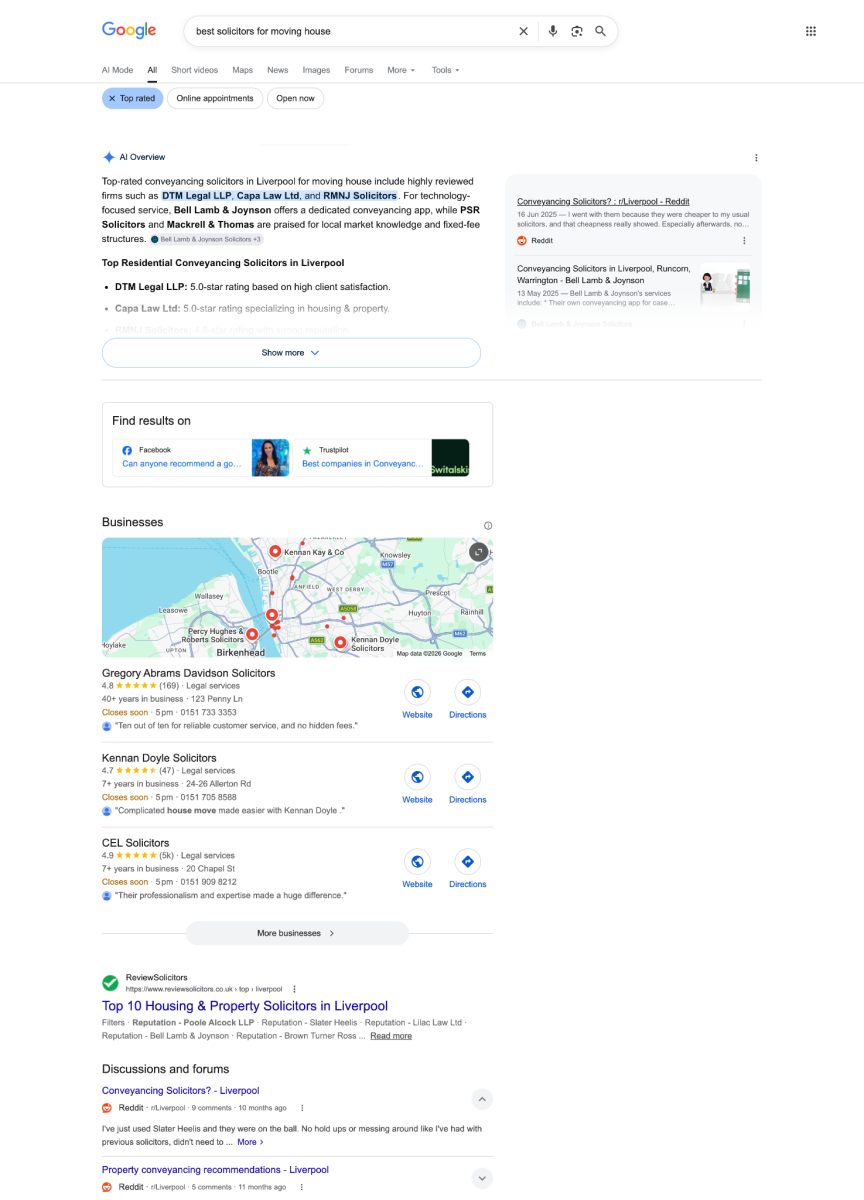
In these cases, Google is doing more of the work. It’s pulling information together and presenting it upfront.
For users, it’s convenient. For businesses, it changes the game slightly.
You can see in this image how far down the page Google pushes its traditional Organic Search results:
Why It’s Increasing
There are a few reasons behind it:
Google Is Trying to Answer More Queries Itself
Google is trying to compete more with AI tools. It’s trying to give people the best answer as quickly as possible.
If it can answer a question without sending someone to another site, it often will.
That’s why you’re seeing more snippets, more summaries, and more AI-generated responses directly in search.
It’s Faster for Users
Most people don’t want to click through five websites if they don’t have to.
If the answer is right there, they’ll take it.
That’s especially true on mobile, where speed and simplicity matter even more.
AI Has Changed Expectations
Tools like ChatGPT, Claude and Perplexity have made people used to getting direct answers.
That behaviour is feeding back into search.
Instead of browsing, users expect a summary. Something quick, clear, and good enough to move on.
A Lot of Searches Were Never Meant to Convert
It’s worth being honest about this.
Many searches are informational. People are learning, checking, or satisfying curiosity. They were never going to convert on that visit anyway.
Zero-click just makes that more visible.
Why This Is a Bigger Deal Than It Looks
The main shift is this:
Rankings don’t guarantee traffic anymore.
You can sit in position one, get plenty of impressions, and still see fewer clicks than you would have a couple of years ago.
That can be frustrating if you’re measuring success purely on traffic.
But it doesn’t mean your visibility has dropped. In many cases, it’s the opposite. You’re just being seen in a different way.
Where Businesses Tend to Lose Out
Most of the issues come from how SEO has traditionally been approached.
A few common patterns:
- Investing heavily in top-of-funnel blog content
- Focusing on rankings without thinking about what happens on the results page
- Ignoring how often your brand actually appears, even without clicks
- Not adapting content for how it’s now being used
If your strategy is still built around “rank and they will click”, it’s going to feel like things are slipping.
How to Still Win in a Zero-Click World
This isn’t about fighting zero-click search. It’s about working with it.
Focus on Being Visible, Not Just Clicked
The first shift is mindset.
If your business appears in a featured snippet or gets pulled into an AI summary, that still has value. People see your name. They associate you with the answer.
Not every interaction needs to result in an immediate click.
Over time, that visibility builds familiarity, and familiarity drives action later.
Go After Queries That Still Require a Click
Not all searches are equal.
Some queries naturally lead to zero-click results. Others don’t.
People searching for things like:
- “best solicitors for moving house”
- “conveyancing solicitors Manchester fees”
…usually need more than a short answer. They need detail, proof, or comparison.
That’s where clicks still happen, and where you should be focusing more attention.
Create Content That Helps People Decide
A lot of websites still lean heavily on general, informational content.
That has its place, but it’s not where most conversions come from.
What tends to work better now:
- Case studies with clear results
- Pages that explain pricing or at least give context
- Honest comparisons
- Straightforward “why choose us” content
If someone is close to making a decision, they’re more likely to click through for this type of information.
Make Your Content Easy to Pull Into Search Results
If Google or an AI tool is going to use your content, it needs to be easy to extract.
That doesn’t mean rewriting everything. Just keep things clear:
- Use simple headings
- Answer questions directly
- Keep sections focused
- Schema markup
You’re not writing for algorithms, you’re just making it easier for your content to be understood and reused.
Build Your Brand, Not Just Your Rankings
This is becoming more important.
If someone sees your name in a search result, a snippet, or an AI response, they’re more likely to engage if they recognise it.
Zero-click doesn’t always mean zero impact. It often leads to:
- Branded searches
- Direct visits later
- Higher trust when they do click
So brand visibility and SEO are now much more closely linked.
Don’t Ignore Third-Party Visibility
Your website isn’t the only thing being considered anymore.
Search engines and AI tools look at what’s said about you elsewhere.
That includes:
- Review platforms
- Industry directories
- Mentions in relevant publications
If you’re not showing up in those places, you’re less likely to be surfaced in search features or AI responses.
Track What Actually Matters
Clicks still matter, but they’re not the full picture.
You also want to keep an eye on:
- Impressions (are you being seen more?)
- Branded search (are more people looking you up?)
- Enquiries and assisted conversions
Tools like Google Search Console and Google Analytics 4 can help, but you may need to look beyond default reports.
Zero-Click Doesn’t Mean Zero Value
It’s easy to see zero-click as a loss.
But in reality, it’s more of a shift in how value is delivered.
Some interactions that used to result in clicks now result in visibility instead. That visibility still plays a role in the decision-making process.
People rarely convert on the first interaction anyway. This just changes what that first interaction looks like.
Where AI Fits Into All of This
AI is accelerating the trend.
Instead of showing a list of links, it’s summarising information and guiding users towards options.
That reduces the need to click around, but when someone does click, it’s usually more intentional.
So while overall clicks may drop, the quality of those clicks often improves.
Final Thoughts
Zero-click search isn’t going away. If anything, it’s likely to increase.
The businesses that struggle are the ones trying to hold onto how search used to work.
The ones that adapt tend to do well.
Because ultimately, you don’t need every click. You just need the right ones.
Want to Understand What This Looks Like for You?
If you’re not sure how much zero-click search is affecting your visibility, that’s usually the best place to start.
We can show you:
- Where you’re appearing in search results
- Where competitors are being surfaced instead
- Which queries are still driving clicks
From there, it’s much easier to see where the real opportunities are.