
How To Get Recommended by ChatGPT
Search behaviour is changing. Around 37% of consumers now start their searches with AI tools instead of Google, and that number is rising. Prompts also tend to be much longer, around three times the length of a typical search query, showing that users are asking more detailed, specific questions. More importantly, traffic from these platforms tends to be higher intent; some studies suggest it converts up to 4.4x better than traditional organic search.
So this isn’t just another channel. It’s where decisions are being shaped.
Users are asking tools like ChatGPT, Perplexity, and Claude direct questions like:
- “Who are the top law firms for medical negligence claims?”
- “Who are the best corporate tax advisers for SMEs in the UK?”
- “What’s the best CRM for B2B SaaS companies?”
Instead of a list of links, users get a shortlist of recommendations. If you’re not included, you’re not being considered by potential customers.
So how do you change that?
How ChatGPT Decides Who to Recommend
Before trying to influence it, it helps to understand how it works.
ChatGPT doesn’t rank websites in the same way Google does. It builds answers by identifying patterns across trusted sources and the brands that appear most credible in a given context.
In simple terms, LLMs are asking: “Which companies consistently show up as reliable answers to this question?”
That decision is typically shaped by four things:
- Brand presence across the web (not just your own site)
- Topical authority in a specific area
- Clarity and usefulness of your content
- External validation (reviews, mentions, case studies)
If you’re weak in one or more of these, you’re less likely to appear.
1. Build Brand Mentions Beyond Your Own Website
If your brand only exists on your own domain, you’re at a disadvantage. LLMs look for repeated mentions of your business across independent sources. This helps them validate that you’re a credible option.
That includes:
- Industry blogs and publications
- “Top 10” and comparison articles
- Review platforms
- Forums like Reddit
- Partner websites and directories
What to do:
- Contribute expert commentary to industry sites
- Get featured in comparison or “best of” content
- Encourage reviews on relevant platforms
- Be present in discussions where your audience already is
You need to look beyond your own site. Mentions on blogs, forums like Reddit, third-party review platforms, and comparison articles all strengthen your visibility.
Example
We’ve used the prompt “Who are the top law firms for medical negligence claims?”
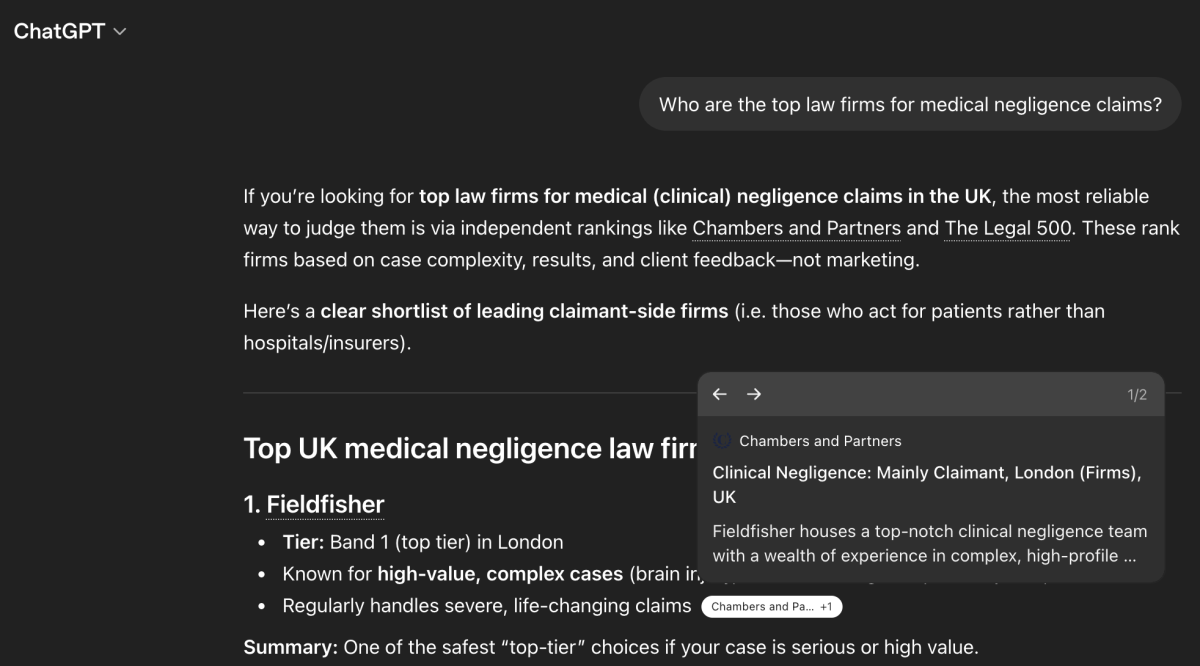
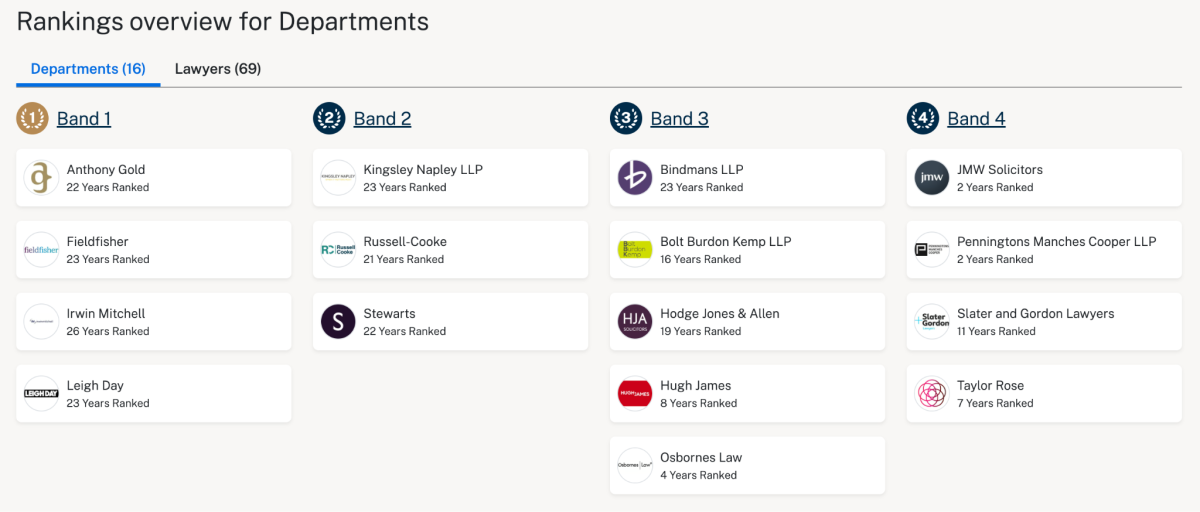
ChatGPT turned to a third-party comparison page to compile its recommendations:
2. Own a Topic, Don’t Just Target Keywords
Ranking for keywords isn’t the goal here. Being recognised as a go-to source on a topic is.
If your content is shallow or scattered, it’s harder for an LLM to associate your brand with a specific area.
What to do:
- Go deep on core topics that matter to your audience
- Create clusters of content (guides, case studies, comparisons, FAQs)
- Cover both beginner and advanced questions
- Keep content updated and relevant
Users are asking very specific questions regarding problems that they’re facing:
- Who are the leading provider in their sector
- Technical specifics of the problem they’re facing
Content that clearly explains your expertise, your solutions, and your niche makes it easier for LLMs to understand and recommend your business.
3. Answer Real Questions
LLMs are built around questions and answers. If your content doesn’t align with how people actually ask things, it’s less useful.
You should be answering questions like:
- “How much does [service] cost?”
- “What’s the difference between X and Y?”
- “Who are the leading providers of [service]?”
What to do:
- Identify real queries your audience asks
- Build content around those questions
- Use clear headings and direct answers
- Include comparisons, pros/cons, and summaries
4. Make Your Content Easy to Extract
LLMs don’t read like humans. They extract.
If your content is hard to interpret, it’s less likely to be used.
What to do:
- Use clear heading structures
- Write concise, direct answers
- Avoid fluff and vague statements
- Include bullet points and summaries
- Add schema tags, such as FAQs
Think about how your content could fit into an answer.
5. Strengthen Trust Signals – E-E-A-T Still Matters
E-E-A-T (Experience, Expertise, Authoritativeness and Trustworthiness) is a Google framework for assessing content quality. It’s a proxy for how LLMs evaluate whether a brand is worth recommending. If your site lacks clear proof of results and expertise, it’s harder for LLMs to justify recommending you.
What to do:
- Add detailed case studies with outcomes
- Include author profiles and credentials
- Showcase reviews and testimonials
- Reference real clients or industries where possible
Demonstrate your expertise and show the people behind your business.
What This Looks Like in Practice
When someone asks:
“What’s the best crm for accountants?”
The response isn’t random.
It’s shaped by:
- Which brands are consistently mentioned
- Who has strong topical content
- What sources reinforce credibility
You won’t be included if your brand:
- Isn’t referenced externally
- Doesn’t clearly own a topic
- Lacks useful, structured content
What Most Businesses Are Missing
Traditional SEO focused on ranking pages. AI search/Generative Engine Optimisation (GEO) is about being recommended within answers.
That requires a broader approach:
- Building brand visibility beyond your website
- Creating genuinely useful, question-led content
- Earning mentions in trusted places
- Demonstrating authority, not just claiming it
Final Thought
Getting recommended by ChatGPT isn’t about gaming an algorithm. It’s about becoming a credible, visible answer to the questions your audience is already asking.
If you can do that consistently, you don’t just rank. You get chosen.